

The rugged north coast of Antrim has always been a meeting place of worlds—where the cliffs face the Atlantic, where the Glens shelter ancient communities, and where Scotland lies just across the narrow sea. It was here that a Scottish clan, descended from the mighty Clan Donald of the Hebrides, planted its roots in Ireland. Through the marriage of John Mór MacDonald of Dunnyveg to Margery Bisset, heiress of the Glens, the MacDonnells secured a foothold that would transform them into lords of Ulster’s coastline. From Glenarm to Dunluce, they came to dominate Ireland’s north coast, ruling by both sword and sea.
This remarkable story is told in greater depth in MacDonnells of Antrim: History of Clann Iain Mhóir, available on Amazon as part of the Ancient Clans of Ireland series.

Sorley Boy and the Battle for Antrim
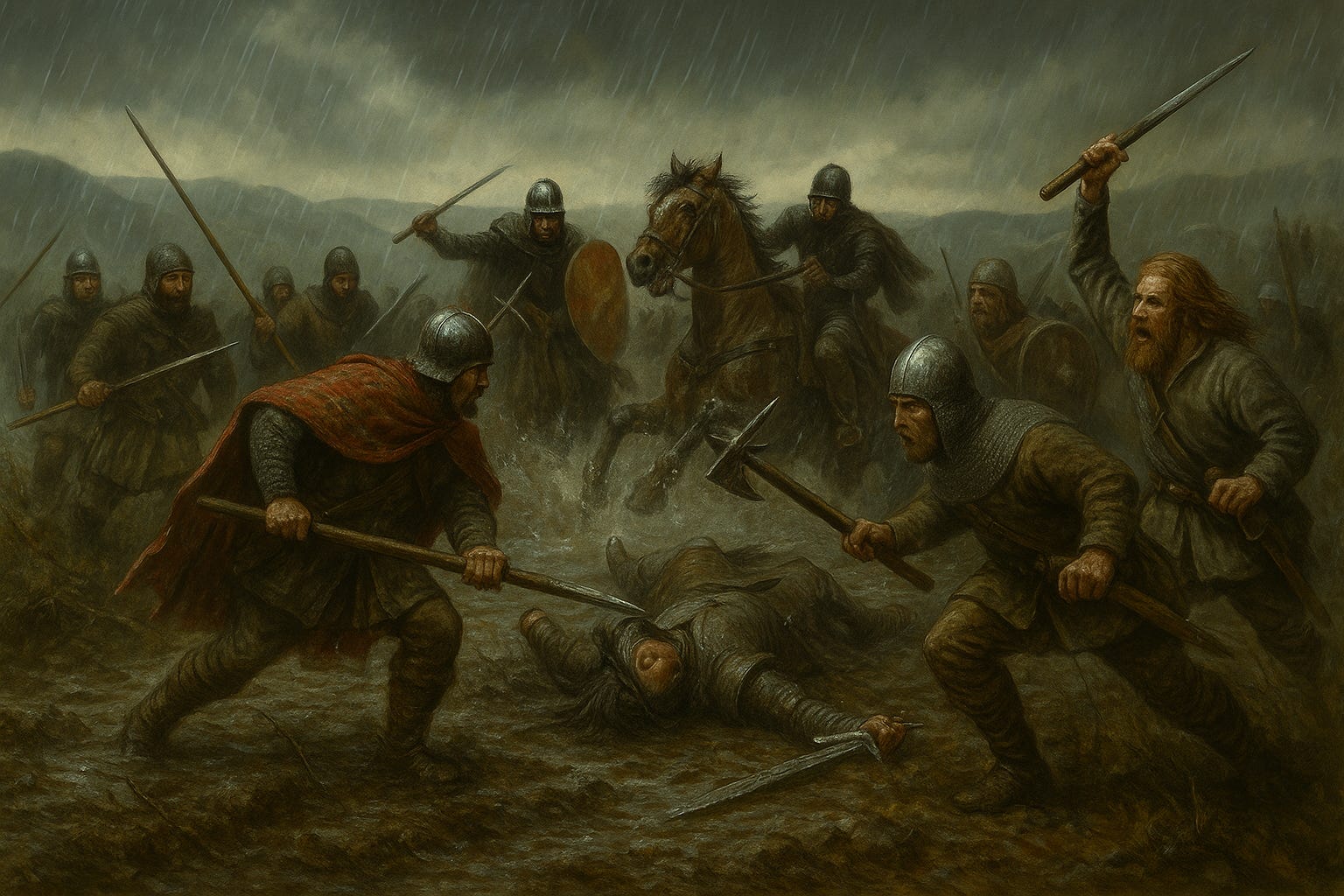
The name most closely tied to the north coast is Sorley Boy MacDonnell (c. 1505–1590). His life was a saga of defeats turned into victories. After losing to Shane O’Neill at the Battle of Glentaisie (1565) and enduring the horror of the Rathlin Island massacre (1575), Sorley Boy rebuilt his fortunes. His decisive victory at the Battle of Aura (1583) over the MacQuillans cemented MacDonnell control of The Route, the coastal territory stretching between Ballycastle and Coleraine. From that moment, the Scottish clan firmly ruled Ireland’s north coast.
Castles on the Edge of the Sea
The MacDonnells expressed their power not only in battles but in stone.
Dunluce Castle, perched on cliffs above the Atlantic, became their most iconic stronghold. From here, they commanded both land and sea, projecting power deep into Ulster and across the North Channel.
Glenarm Castle provided a more domestic seat, anchoring their presence in the Glens.
Kinbane and Red Bay Castles reinforced their grip on the coastline, protecting trade, defense, and their lifeline to Scotland.
These fortresses were more than military sites—they symbolized the blending of Scottish martial tradition with Irish lordship.
From Gaelic Chiefs to Earls
While rooted in Gaelic custom and Brehon law, the MacDonnells adapted to changing times. Sorley Boy’s son, Randal MacDonnell, made peace with the English Crown and was created 1st Earl of Antrim in 1620. This elevated the Scottish-Irish clan into the ranks of the Anglo-Irish aristocracy, ensuring their lands and titles were recognized even as other Gaelic lords were dispossessed.
Their dual identity never vanished. The MacDonnells remained Gaelic patrons, supporters of poets, musicians, and harpers, while also navigating the politics of the Stuart kingdoms. They were at once Irish lords and Scottish nobles, a rare fusion that allowed them to endure.
Folklore and Memory
The north coast of Ireland still whispers with MacDonnell legends. Visitors to Dunluce speak of the banshee’s wail before the death of a chief, the phantom piper playing from sea caves, or the White Lady haunting the ruins. These tales, passed through generations, kept alive the memory of a clan whose power once dominated the cliffs and glens.
A Clan Across the World
In later centuries, political upheaval and famine pushed many MacDonnells to join the wider Irish and Scottish diaspora. Families bearing the names MacDonnell, McDonnell, McConnell, and MacDonald carried their heritage to North America, Canada, Australia, and Argentina. From the Glens of Antrim to global shores, the name remained tied to resilience, seafaring strength, and a legacy rooted in both Ireland and Scotland.
Why They Still Matter
The MacDonnells of Antrim are more than a family of the past. They embody the intertwined histories of Scotland and Ireland—the movement of people across the sea, the blending of cultures, and the survival of Gaelic identity under enormous pressure. Their castles remain icons of Ireland’s north coast, their stories enrich both Irish and Scottish heritage, and their name endures across the world.
To learn more, you can explore MacDonnells of Antrim: History of Clann Iain Mhóir, now available on Amazon, part of the Ancient Clans of Ireland series. It is a celebration of the Scottish clan that became Irish lords, a people who ruled Ireland’s north coast with resilience, vision, and pride
.