Uncover the epic history of Clan Matheson - https://fairbairncrests.com/products/the-complete-history-of-clan-matheson-digital-edition
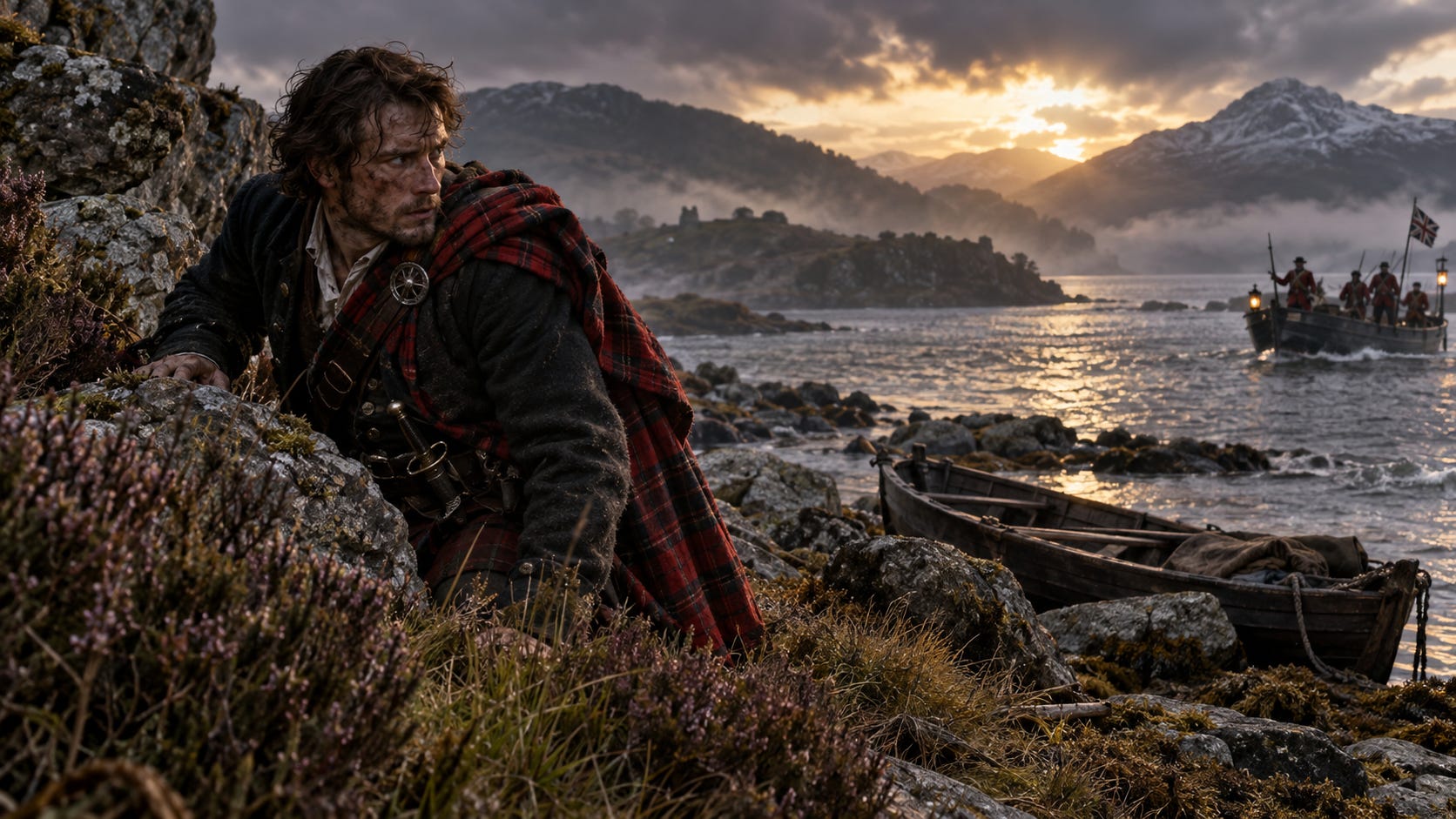
The Battle of Culloden is remembered as one of the most dramatic turning points in Highland history, but for the families who were actually caught up in the Jacobite rising, the story did not end when the fighting stopped. Defeat meant that surviving supporters of Prince Charles Edward Stuart had to think immediately about escape, concealment and the possibility of arrest. Among the Highland families whose traditions preserve memories of that desperate period were the Mathesons of Bennetsfield. Their account tells the story of John Matheson, a man whose Jacobite allegiance brought him to Culloden and whose survival afterward became one of the most memorable episodes in the family’s history.
The Mathesons did not enter the Jacobite era as a clan united behind a single political cause. Different branches had developed their own relationships, estates and loyalties, and those connections could lead men bearing the same surname to opposite sides of a rising. The Mathesons of Shinness in Sutherland had strong connections with interests that supported the government, while the Bennetsfield family became associated with the Jacobite side. That division is important because it reveals something often lost in popular accounts of the Highlands: a clan was not necessarily a single political or military unit marching together behind one chief.
John Matheson belonged to the Bennetsfield branch, whose centre was on the Black Isle. The family had established itself there after earlier generations associated with Fernaig in the west, and by the eighteenth century it was part of the landed society of northern Scotland. John married Elizabeth Mackenzie of Belmaduthy, strengthening the network of relationships linking the Mathesons with neighbouring Mackenzie families. He had land, fishing interests and other resources assigned for the support of his household, giving him a position from which his decision to support the Jacobite cause carried real consequences.
The Mackenzie connection itself demonstrates how complicated Highland loyalty could become. The wider Mackenzie interest was divided during the rising of 1745. Lord Fortrose remained outside the Jacobite cause and supported government forces, while George Mackenzie, Earl of Cromarty, joined the Stuarts. John Matheson of Bennetsfield became associated with the Cromarty side of that divided political world. Family relationships therefore mattered, but the surname of a neighbour or patron did not automatically reveal which side a man would support.
According to the Bennetsfield family account preserved in the later history of the Mathesons, John and some of his brothers were present with the Jacobite army at Culloden on 16 April 1746. The surviving account does not provide a complete battlefield record showing exactly where the Mathesons stood, how many of them fought or what happened to each man during the fighting. What it does preserve is a family tradition connecting John directly with the defeated Jacobite force. The most detailed part of that tradition begins only after the battle itself, when survival became the immediate concern.
Culloden had left the Jacobite army shattered, and John Matheson’s problem was no longer how to help win the Stuart cause. He had to avoid capture and find a way to move through a country in which government forces were searching for men connected with the rebellion. The Bennetsfield tradition describes a period of concealment after the defeat. Hiding offered temporary security, but remaining hidden indefinitely was not a solution for someone who eventually needed to return to family, property and ordinary life.
The story then turns toward the water. John is remembered as making his way back to a boat, an entirely believable means of movement for a man from a northern society in which coastal travel remained an important part of everyday life. Boats connected communities long before modern roads transformed travel across the Highlands. In the circumstances following Culloden, however, the journey carried an obvious danger: the same waters that offered a route away from immediate pursuit could bring a fugitive into contact with government authority.
That danger became real when John’s journey brought him into an encounter with a government vessel. For a Jacobite supporter attempting to escape after Culloden, such a meeting could easily have ended in detention. The family story instead preserves an unexpected intervention. A clergyman reportedly helped John by presenting him to those aboard the vessel in a more favourable manner, creating an opportunity for the suspected Jacobite to avoid the fate that might otherwise have awaited him.
Then the story takes an even more unusual turn. According to the Bennetsfield tradition, an engineer connected with government work became interested in building stone associated with John’s property. Suddenly a man’s usefulness as a landholder could matter more than his recent political allegiance. Property, resources and personal connections opened a path through circumstances that military resistance could no longer solve.
It is exactly this part of the story that makes John Matheson’s escape so fascinating. His survival was remembered not as a heroic charge through government troops or a dramatic sword fight on a Highland hillside, but through relationships, practical interests and fortunate encounters. A clergyman’s assistance mattered. A government engineer’s interest mattered. John’s connection with useful resources mattered.
The account also reminds us to separate family tradition from what can be firmly reconstructed. The escape survives through the Bennetsfield narrative rather than through a complete series of contemporary official records confirming every stage of the journey. That does not make the story worthless. Family traditions can preserve important memories of individuals and events, but their most dramatic details deserve to be identified for what they are rather than quietly transformed into documented fact.
John’s descendants apparently valued the Culloden connection deeply. The nineteenth-century clan history records the discovery in 1838 of a musket fitting said to have been found on the battlefield and bearing John’s name, along with a date, device and motto. The later history of the object is unclear, so it cannot supply a simple piece of physical proof for every part of the family narrative. Even so, the story of its discovery shows how strongly Culloden remained attached to the Bennetsfield family’s understanding of its own past.
The political sympathies of the people who preserved the story also deserve attention. The Bennetsfield narrative treats the Jacobite experience sympathetically and remembers the defeated with admiration. Like many family histories, it was not written from a completely detached position. Its language reflects the loyalties and memories of later generations who regarded John’s survival as part of their inheritance.
At the same time, another Matheson could have experienced the rising very differently. Men bearing the Matheson name served in government Independent Highland Companies during the same crisis, including officers recorded under spellings such as Mathisom and Mathison. Northern Scotland therefore contained Mathesons supporting the government while John of Bennetsfield followed the Jacobite cause. Culloden was not simply a contest in which every Highland surname stood together on one side.
That wider context makes John’s escape more valuable than a colourful adventure story. It reveals a world in which kinship, patronage, marriage, property and individual decisions could all affect political allegiance. It also shows how quickly those relationships could change meaning after defeat. A connection useful for joining a cause in 1745 might be replaced in 1746 by the entirely different relationships needed to survive its collapse.
John Matheson returned from the Jacobite crisis to a family whose future would increasingly depend upon property, marriage, commerce and adaptation rather than the ability to take the field for a dynastic cause. The Highlands themselves were entering a period in which older forms of military and territorial authority would continue to change. Yet the memory of Culloden remained. For the Bennetsfield Mathesons, John’s escape became one of the stories through which later generations remembered their place in that turbulent century.
The story is only one episode in the much longer history of Clan Matheson. The Complete History of Clan Matheson follows the family from its medieval Gaelic roots in Lochalsh through Eilean Donan, rival Matheson branches, Jacobite Scotland, the Highland Clearances, migration, the China trade, Highland estates and the development of the modern clan. John’s journey away from Culloden represents only a few days within that history, but those days capture something essential about the clan’s past: Matheson survival often depended not upon remaining unchanged, but upon adapting to circumstances that earlier generations could never have predicted.
References
Mackenzie, A. (1900). History of the Mathesons, with genealogies of the various families (A. MacBain, Ed.; 2nd ed.). Eneas Mackay.
Simpson, P. (1996). The Independent Highland Companies, 1603–1760. John Donald.