Uncover the epic history and origin of Clan Mackay - https://fairbairncrests.com/products/the-complete-history-of-clan-mackay-digital-edition
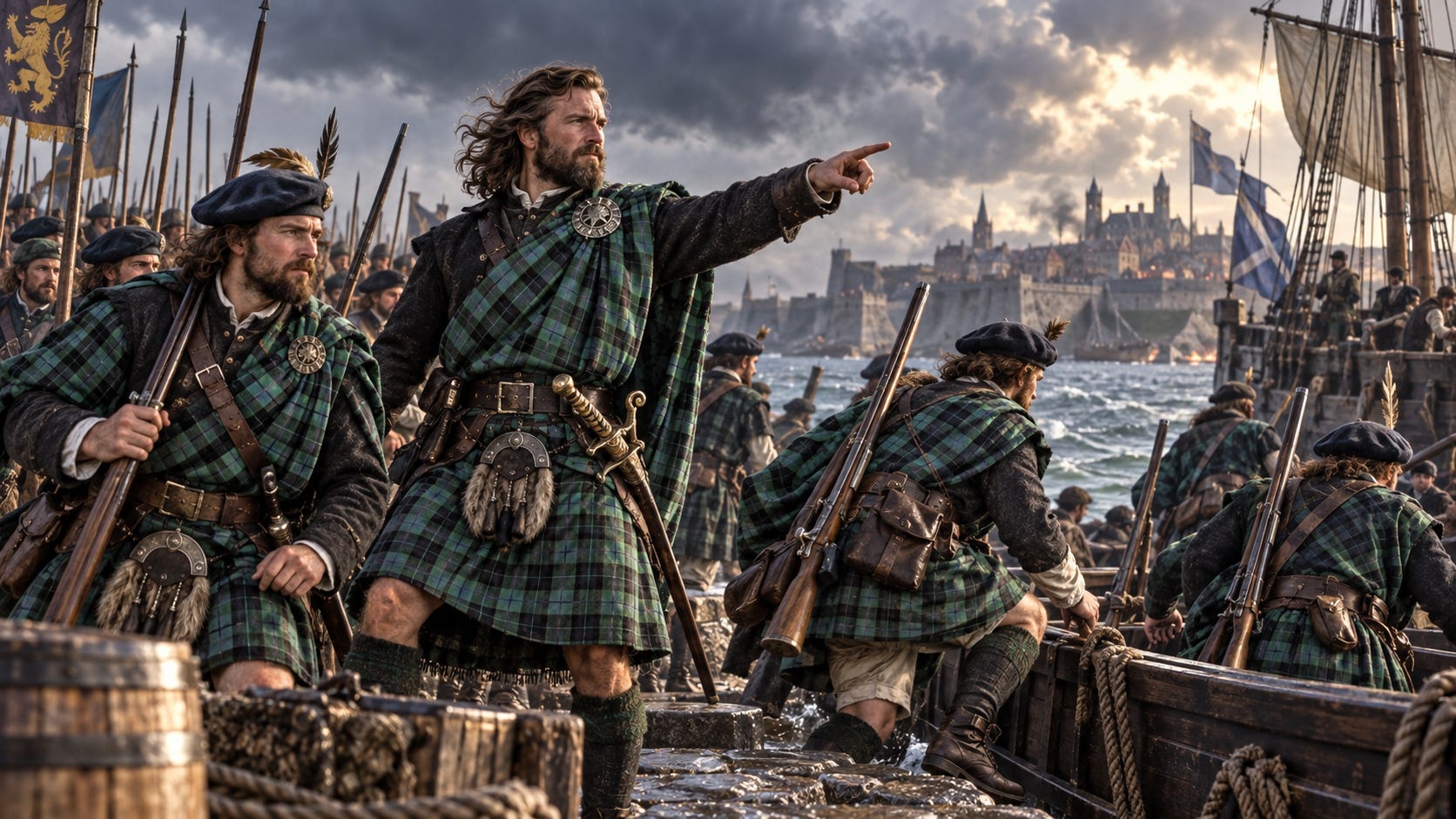
The name Clan Mackay is usually associated with the far north of Scotland: Strathnaver, Tongue, Durness and the windswept country facing the Atlantic. Yet in the seventeenth century, the Mackay story suddenly expanded far beyond the Highlands. Men connected with a northern Scottish chief found themselves crossing the North Sea and serving in one of the most destructive conflicts Europe had yet experienced. Their story became associated with the formidable reputation remembered in later generations as “Mackay’s Invincibles.”
At the centre of that story was Donald Mackay of Strathnaver, later the first Lord Reay. By the 1620s, Donald had inherited a substantial northern position built over generations through landholding, alliances, royal connections and careful legal agreements. But Scotland was no longer the only arena in which ambitious noblemen and soldiers could seek advancement. Across Europe, the Thirty Years’ War was creating an enormous demand for experienced officers and recruits, and thousands of Scots would eventually become involved.
In March 1626, Donald Mackay received authority to raise a large body of men for continental service. The commission contemplated a force of around 2,000 soldiers, originally intended for service connected with the army of Count Ernst von Mansfeld. This did not mean that two thousand Mackays simply marched out of Strathnaver together. Regiments of the period were commonly known by the name of their colonel, and Mackay’s force included officers and recruits drawn from a broader Scottish network.
Raising a regiment was an enormous undertaking. Men had to be recruited, organised, equipped, fed and transported before they ever encountered an enemy. Officers required money to maintain their companies, while ships had to be found to carry the soldiers across the North Sea. Donald Mackay was not simply leading a traditional Highland war band; he was becoming involved in the complicated financial and administrative world of seventeenth-century professional warfare.
The expense was considerable. Donald had recently acquired interests in Moidart and Arisaig in the western Highlands, but those properties were disposed of while preparations for continental service were underway. Land could be transformed into money, and money could be transformed into soldiers, weapons, provisions and transportation. The decision demonstrates how closely military ambition and the fortunes of the Mackay estate became connected.
The regiment’s departure was delayed, and Donald himself became ill before the initial force sailed from Scotland in the autumn of 1626. This meant that the regiment began its continental adventure without its colonel accompanying every stage of the journey. Command therefore depended upon experienced officers capable of keeping the force together while circumstances changed around them. Donald followed later, but from the beginning the regiment was much more than the personal following of one man.
By the time the Scots reached continental Europe, the military situation had already changed dramatically. Mansfeld’s campaign had suffered severe setbacks, while Christian IV of Denmark remained engaged against the forces of the Holy Roman Emperor. Mackay’s regiment consequently entered Danish service and became part of the struggle taking place across northern Germany. What had begun as a Scottish recruiting enterprise was now part of an international war involving monarchs, princes, cities and armies drawn from across Europe.
The soldiers quickly discovered that warfare on the Continent involved far more than dramatic charges across open fields. Campaigning meant marching, guarding towns, defending fortifications, securing roads and enduring shortages, disease and exhausting conditions. A regiment could lose men without fighting a famous battle, and companies might be separated from one another for different assignments. The reality experienced by Mackay’s soldiers was therefore considerably more complicated than the heroic legends that later gathered around them.
One of the regiment’s early actions came at Boitzenburg on the Elbe in 1627, where companies associated with Mackay’s force helped defend a position against imperial pressure. Major Dunbar appears prominently in accounts of this service. The Scots were operating during a deteriorating campaign in which Danish forces were increasingly forced backwards. Holding a town or delaying an enemy could still be militarily valuable even if the larger army was retreating.
Further fighting near Oldenburg in Holstein placed the soldiers in another dangerous defensive situation. Forces withdrawing toward the coast required protection, and men could be ordered to hold ground so that others had time to escape or embark. Donald Mackay himself was wounded during this phase of the campaign. The experience made clear that the Highland chief who had organised the regiment was exposed to the same battlefield dangers faced by other officers in European service.
Casualties and sickness meant that recruitment could not simply end when the first ships left Scotland. Donald returned to seek additional men while officers continued the regiment’s work overseas. Fresh drafts were needed to replace losses, creating a recurring connection between Scotland and the continental battlefields. Families at home could see sons, brothers and husbands disappear into a war fought hundreds of miles from the northern Highlands.
One of the most important surviving voices from this world is Robert Monro, an officer who served with the Scots and later published an account of his military experiences. His writing provides a remarkable window into the regiment’s movements, hardships and ideas about military conduct. Monro wrote as a professional soldier rather than as a detached historian, and his pride in Scottish service is unmistakable. Even so, his narrative helps reveal the demanding reality beneath the later reputation of Mackay’s men.
The most famous episode in the regiment’s early continental history came at Stralsund in 1628. The Baltic port was under heavy pressure from imperial forces, and Scottish soldiers associated with Mackay’s regiment became part of its defence. Stralsund was strategically important, and holding it required cooperation among forces serving different political interests. Danish assistance and growing Swedish involvement overlapped as defenders attempted to keep the city from falling.
The fighting at Stralsund was not simply a matter of Highland swordsmen charging an enemy. Defending a fortified town required watches, reliefs, ammunition, repairs and the ability to withstand repeated assaults. Soldiers needed discipline enough to remain at their posts through long periods of danger and exhaustion. Robert Monro himself was wounded during the defence, reminding us how personally costly the struggle could become even for experienced officers.
The successful resistance at Stralsund helped strengthen the reputation of the Scots involved, but the war was changing once again. Denmark gradually withdrew from the conflict, while Gustavus Adolphus of Sweden emerged as the leading Protestant military power in northern Europe. Scottish officers and soldiers who had already acquired valuable experience could transfer into Swedish service. Mackay’s military enterprise therefore survived even as the political arrangements around it changed.
By 1629 and the early 1630s, men originally associated with Mackay’s regiment were participating in the Swedish phase of the war. Donald received further authority connected with recruiting for Swedish service. Scottish soldiers could now find themselves operating within an army whose campaigns would become some of the most celebrated of the Thirty Years’ War. What had begun in the remote north of Scotland was thoroughly connected to the military transformation of Europe.
Donald Mackay’s own standing rose considerably during these years. He was created a baronet in 1627 and then, on 20 June 1628, Lord Reay. The royal patent specifically recognised his service connected with the war in Germany and his role in bringing other men into that dangerous employment. The title gave the Mackay chiefly family a permanent place within the Scottish peerage and created the Reay name that remains central to Clan Mackay history.
Military glory, however, came at a price. Organising troops required credit and large advances of money, while payment from foreign employers could be delayed or uncertain. A successful military reputation did not automatically place cash in the hands of creditors waiting in Scotland. Donald’s continental ambitions ultimately contributed to financial pressures that affected the landed inheritance supporting his family.
This is where the story of “Mackay’s Invincibles” becomes more interesting than the nickname itself. No seventeenth-century regiment was literally invincible. Mackay’s soldiers suffered wounds, sickness, losses, retreats and changes of command like every other military formation of their age. Their reputation came from enduring difficult service, defending important positions and repeatedly continuing despite the extraordinary pressures of campaigning.
Their story also reveals something much larger about Highland history. The Highlands were not an isolated world cut off from seventeenth-century Europe. Scottish chiefs could raise troops for foreign rulers, officers could build international careers, and soldiers from northern communities could find themselves guarding Baltic ports or fighting beside men from countries they had never previously seen. Strathnaver was geographically remote from the great continental battlefields, but it was not disconnected from them.
The European adventures of Mackay’s regiment also changed the way the clan would be remembered. Military service became an important part of the family’s public identity, particularly through Donald Mackay, first Lord Reay, and later through figures such as Hugh Mackay of Scourie. Yet the complete history is not simply one of soldiers and battles. Behind every overseas expedition stood estates, households, families, tenants and financial obligations that made the enterprise possible.
That larger story is what makes Clan Mackay so fascinating. A clan rooted in the northern valleys and coastline of Scotland became connected with royal courts, European armies, religious conflict and the shifting politics of the Thirty Years’ War. The men remembered as Mackay’s Invincibles were part of a much broader transformation in which Scottish military experience became an international commodity.
For readers who want to follow that story from its beginnings in medieval Strathnaver through the rise of the Lords Reay, the European wars, Jacobite-era Scotland, Rob Donn, the Highland Clearances and the worldwide Mackay diaspora, The Complete History of Clan Mackay explores the full journey. Donald Mackay’s regiment is one remarkable chapter in a history that stretches across centuries and far beyond the boundaries of the Scottish Highlands.
References
Mackay, A. (1906). The book of Mackay. N. Macleod.
Monro, R. (1637). Monro, his expedition with the worthy Scots regiment (called Mac-Keyes Regiment).
University of St Andrews. (n.d.). Mackay of Scourie, Hugh [SSNE 5005]. Scotland, Scandinavia and Northern European Biographical Database.
University of St Andrews. (n.d.). Monro, Robert [SSNE 94]. Scotland, Scandinavia and Northern European Biographical Database.